

A printed fabric in a contract interior has to pass the same fire test as a plain one. Mublo prints only on fire retardant base fabrics from its own range, where the combination of fabric and print has been tested and certified.
The design can be an image, a pattern, a texture or a brand graphic, reproduced for one project. Mublo runs it as a service, from the first discussion of the idea to the delivered and documented fabric. A custom print, with the certificate of a standard one.
Upholstery, curtains and wall panels ask different things of a print: resistance to rubbing, to light, to cleaning. Mublo applies the print technique and fixation that suit the use, on a base fabric certified for it. The technique is chosen for the application, never the other way round.
Seating asks a print to hold under friction and repeated cleaning. The print is fixed for rubbing fastness, on a base fabric rated for contract seating.
Curtains ask for light fastness and a fabric that still drapes after printing. Extra wide bases allow a curtain without a vertical seam.
Printed fabric for wall panels, cushions and accessories, so one design can run through a whole room.
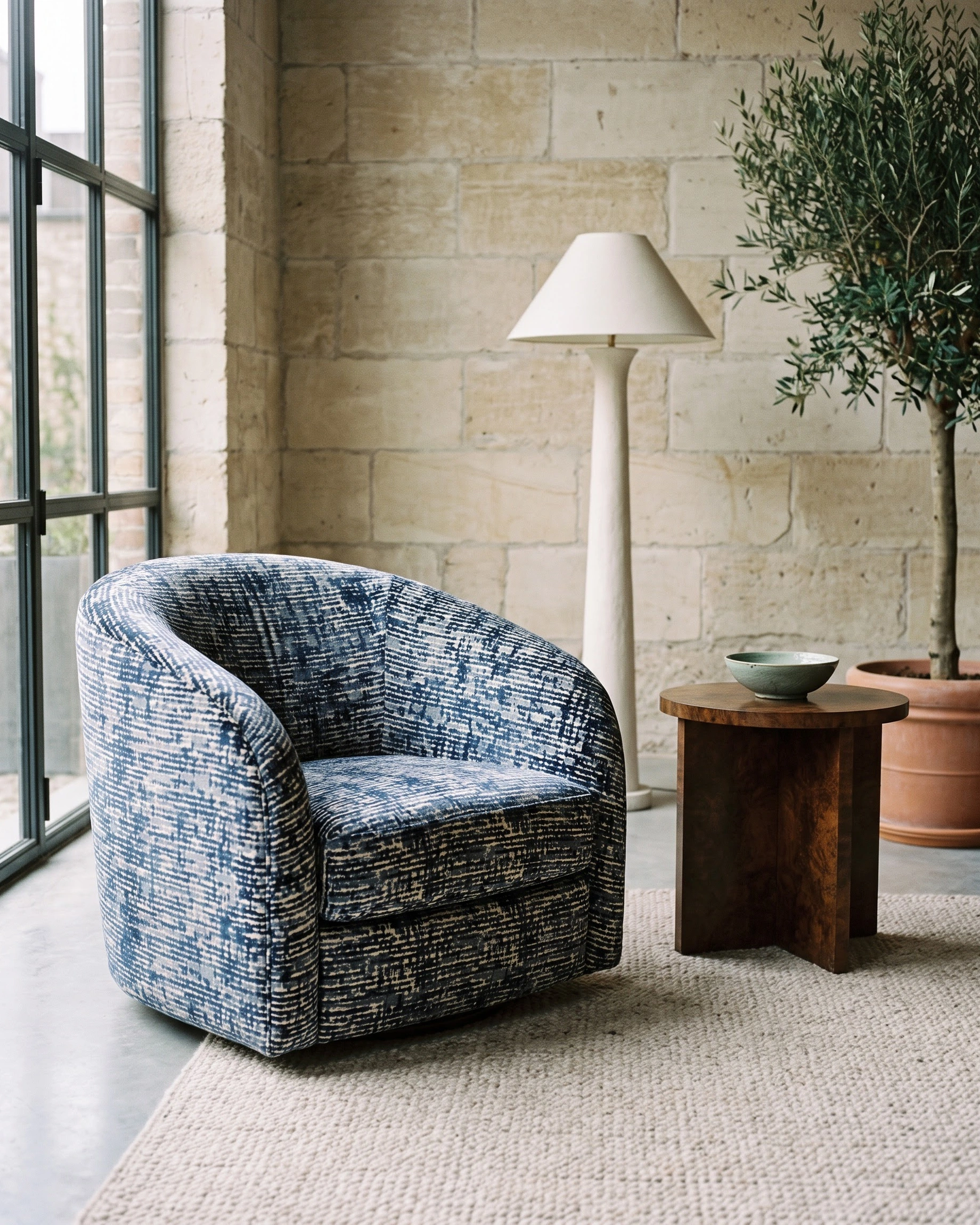
Upholstery: the print on a short pile velvet

Curtains: the same print, full height
Mublo guides every print project from the first idea to delivery. It starts with a conversation about the idea and a look at the files.
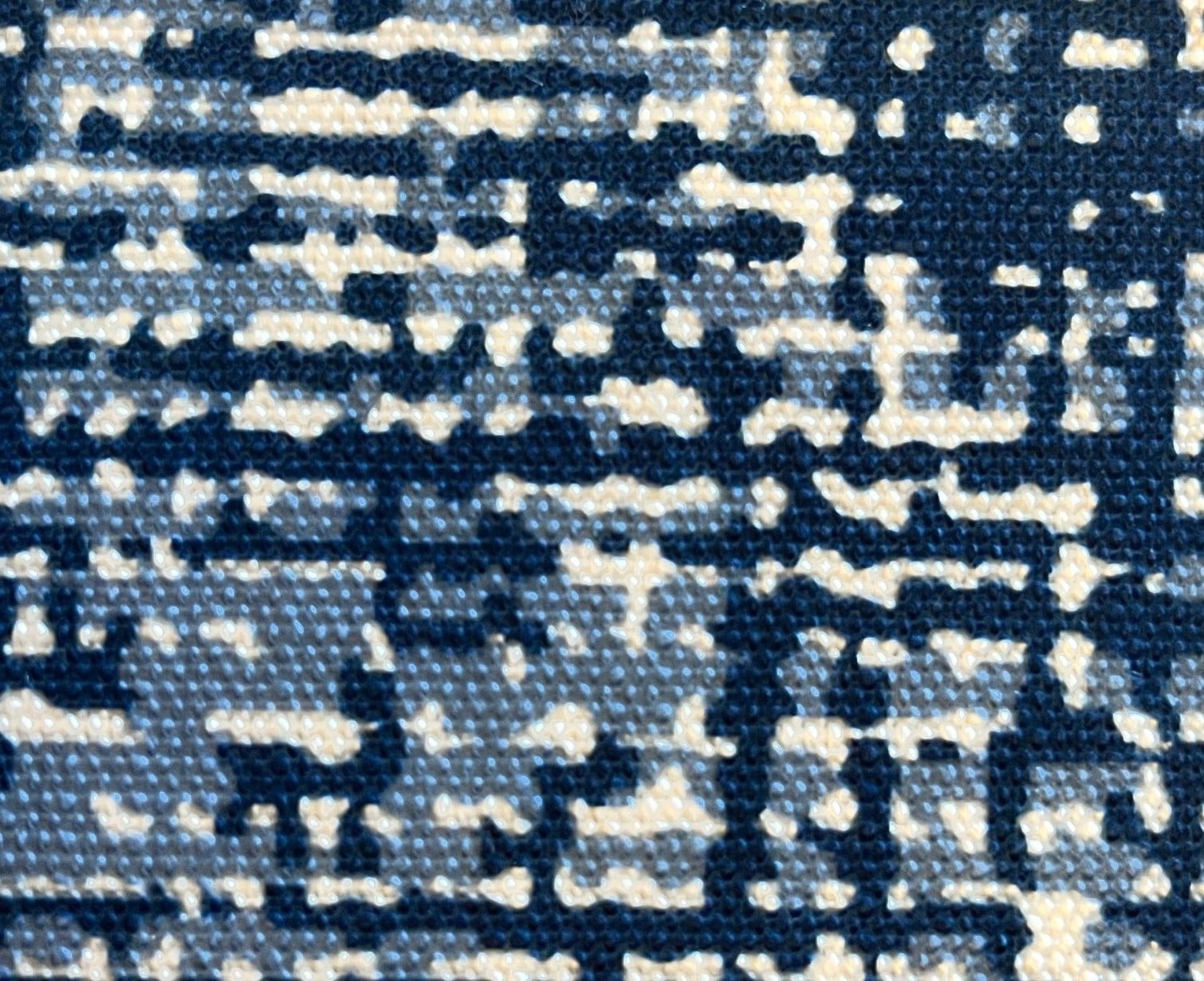
A test print on a linen look base fabric, before production
Step 1
The design, the application and the space are discussed together. Mublo checks the files for resolution, scale and colour, and advises on repeat and placement.
Step 2
Mublo proposes a base fabric from its range and the print technique that fit the application and the fire requirement of the project.
Step 3
A test print on the chosen base shows colour, scale and handle before production. Colour is adjusted on that sample, not on a screen.
Step 4
The approved design is printed to the agreed length and delivered with the fire certificate that applies to the printed fabric.
Describe the idea and the project. Mublo comes back to you to discuss it and to look at the files together.
Thank you. Mublo will contact you shortly to discuss the project.
Something went wrong while sending. Please try again or write to sales@mublo.com.
Mublo prints only on combinations of base fabric and print that have been tested. The certificate delivered with the project covers the printed fabric, not only the plain base.
Fire retardant base fabrics from the Mublo range, in plain, linen, chenille and velvet qualities. Mublo proposes the base that fits the application and the look of the design.
JPEG, TIFF, PDF or EPS, at the final print size where possible. Colours can be given as Pantone or RAL references. Mublo checks every file before anything is printed.
A print takes on the colour and texture of its base. A dyed or melange ground shifts the final tone, a velvet pile deepens it. That is why colour is judged and adjusted on the test print.
Yes. Next to a printed design, base fabrics can be dyed to a custom colour, so a plain fabric matches the print exactly.
Architects, interior designers, upholsterers, furniture makers and project teams, wherever the project is.


